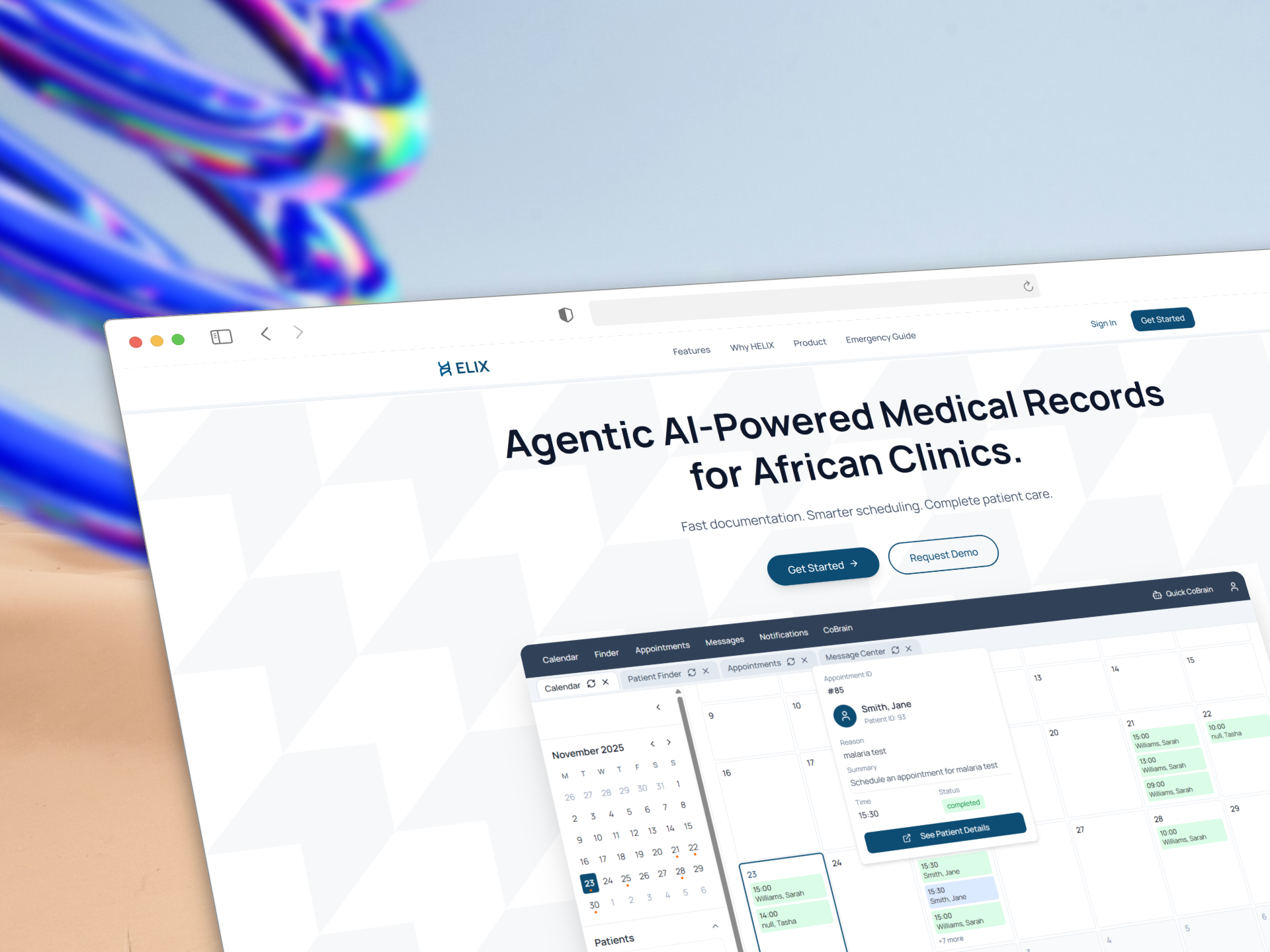
About the Project
Helix came out of a hackathon. Me and David Adedeji decided to tackle the healthcare problem we kept hearing about from clinicians across Nigeria. Doctors are drowning in paperwork. The patient in front of them gets maybe a third of their attention because the rest is going into writing up notes, pulling charts, scheduling follow ups, and chasing down records from the last visit. Existing EMR systems were built for Western hospitals with dedicated admin staff. In most African clinics, the doctor is also the admin.
So we built Helix as an AI native EMR. One where a doctor can just say "pull everything on Mrs. Adebayo's last three visits and summarise what I need to know before she walks in" and get a clinician friendly answer in seconds. The agent is a two stage system. Gemini 2.5 Flash plans which tools to call, LangChain orchestrates the execution with structured output parsing, and the result comes back as a clean summary prioritising clinical findings over admin noise. We designed it with two faces. Doctors get a multi tab workspace and calendar, patients get a simple profile and AI booking chat. The whole thing is optimised for the reality that most clinic staff don't have time to learn complicated software. If it doesn't work in the first 30 seconds, they go back to paper.
What I Built
- ▸Two-stage agent — Plan → Execute with Gemini 2.5 Flash
- ▸LangChain tool orchestration with structured output parsing
- ▸Multi-tab Excel-like clinical workspace
- ▸Natural language queries for patient encounters, schedules, records
- ▸Firebase Auth with role-based access (doctor vs patient)
- ▸Zustand state management for API caching
System Design
The agent uses a two-stage architecture powered by Google Gemini 2.5 Flash. Planning stage: analyses the doctor's request and determines which tool(s) to call via structured output. Execution stage: runs the planned actions against the EMR, retrieves data, and generates a clinical summary. Orchestration is handled by LangChain with structured output parsing for reliable tool selection. The frontend is Next.js 16 + React 19 with a tabbed Excel-like workspace. State management uses Zustand for API caching. Auth is Firebase with role-based access (doctor vs patient). Calendar supports Day/Week/Month views with smart appointment stacking.
Tech Stack
- Next.js
- React
- LangChain
- Gemini 2.5
- Firebase
- Zustand
- Radix UI
- TypeScript